
 07584 319522
Geyser Clean vs Window Pro Clean: Which Hot-Water System Suits You?
Last Updated: November 21, 2026
Quick Summary
Geyser Clean vs Window Pro Clean depends on your round: heating speed, running costs and how well the system suits your van and poles. Neither provider has a verified like-for-like comparison, so test each option against your own work.
- Check time to reach working temperature from cold, which affects early starts.
- Estimate running costs from rated heater output, fuel consumption and the hours you run it.
- Ask whether the heater stays on between jobs, since idle running burns fuel for no benefit.
- Confirm the maximum flow rate and whether it is quoted for one pole or two.
- Get servicing, filter and warranty terms in writing before you buy.
Table of Contents
- Geyser Clean vs Window Pro Clean at a Glance
- How a Hot-Water Window Cleaning System Works
- Heater Type, Fuel Source and Heating Speed
- Window Cleaning Heater Running Costs Compared
- Water-Fed Pole Hot-Water System Compatibility
- Maintenance, Servicing and Warranty Considerations
- Choosing the Right System for Your Round
- Frequently Asked Questions
Geyser Clean vs Window Pro Clean at a Glance
Choosing between Geyser Clean and Window Pro Clean comes down to what you need from a hot-water system on your round: heating speed, running costs, and how well it integrates with your van and poles, so weigh the geyser clean vs window pro clean options against those criteria. Neither provider has published a verified, like-for-like comparison that we can cite here, so this guide focuses on the decision criteria that matter and how to test each option against your own work.
We have set out the buyer’s checklist below so you can judge both systems on the same terms.
How a Hot-Water Window Cleaning System Works
A hot-water window cleaning system heats water before it reaches the pole, so the water arrives warm and cuts through grease, grime and stubborn films more effectively than cold water. Most setups pair a heater with a pure-water filtration stage, delivering water that dries without leaving streaks.
Many operators find the heater is the component that determines most of the system’s performance. Check how it is fuelled, how quickly it heats, and whether it can hold a steady temperature when you are running one pole or two.
Heater Type, Fuel Source and Heating Speed
Heating speed matters on early starts, so ask each supplier how long the system takes to reach working temperature from cold.
A professional window cleaner setting up a van-mounted water-fed pole system beside a parked van on a residential street shows how these units sit in day-to-day use.
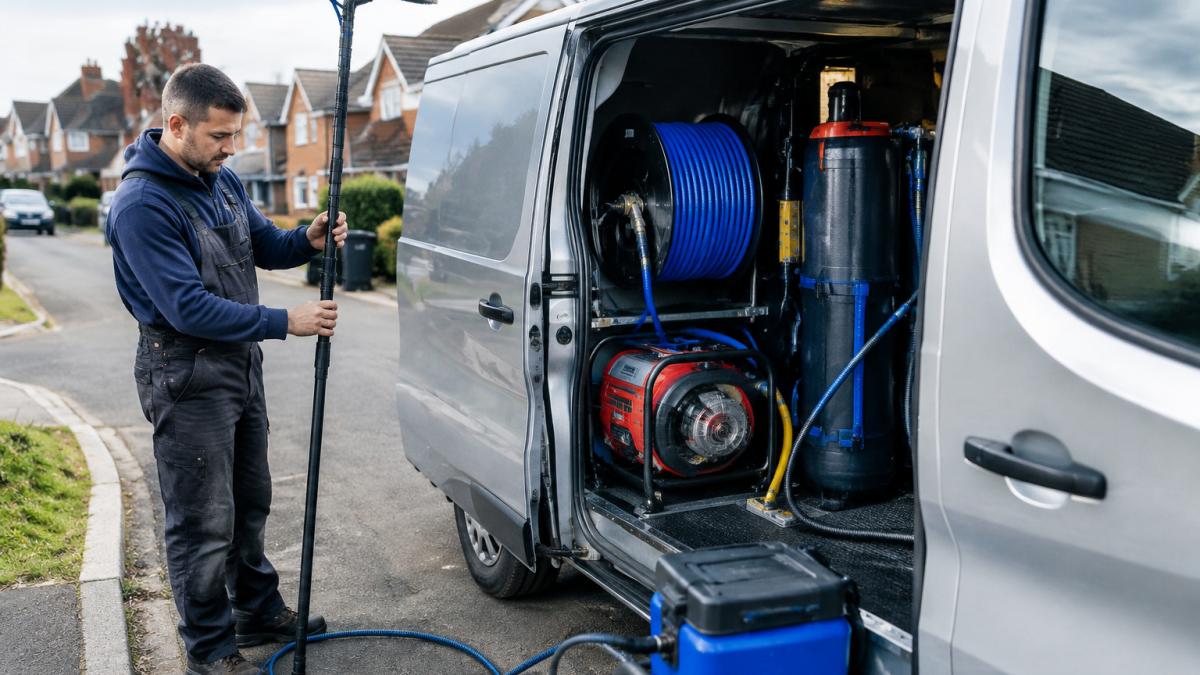
The article’s key comparison points for heating speed and running costs are summarised below.
| Factor | What to check | Why it matters |
|---|---|---|
| Heating speed | Time to reach working temperature from cold | Affects early starts |
| Heater output | Rated output in kW | Drives fuel or electricity use |
| Fuel consumption | Published figure at rated output | Used with current prices for running costs |
| Standby cut-off | Whether the heater stays on between jobs | Avoids burning fuel for no benefit |
| Recovery time | Time to regain temperature after a pause | Affects fuel use and jobs per day |
| Pricing | Current GBP prices and what they include | Shows whether servicing and filters are extra |
Window Cleaning Heater Running Costs Compared
Running costs are an important factor when comparing hot-water systems, and buyers should build their own estimate before deciding. The honest approach is to build your own estimate from three inputs: heater output in kilowatts, fuel consumption at that output, and the hours you actually run the heater each week.
Diesel heaters typically consume fuel in proportion to their rated output, so a higher-output unit costs more per hour but heats more water and supports more poles. LPG units are often cheaper per litre of fuel but vary more in price across suppliers, and electric immersion units shift the cost onto your electricity tariff, which matters if you charge from a domestic supply rather than a depot. Ask each supplier for the heater’s rated output in kW and its published fuel consumption at that output, then multiply by your current fuel or electricity price in GBP per litre or per kWh. If you are weighing whether to hire or invest in equipment, you can also look at our window cleaning service to see what we provide on a round.
A common pattern is that operators underestimate how much idle time the heater runs while they are not actually cleaning. A heater that stays on between jobs burns fuel for no benefit, so check whether the system has a standby or thermostat cut-off and how quickly it recovers temperature after a pause. That recovery time affects both fuel use and how many properties you can complete in a day.
Ask suppliers to confirm current prices in GBP, what the price includes, and whether servicing, filters and consumables are extra. Compare those against your own fuel estimate rather than against headline purchase price alone.
Water-Fed Pole Hot-Water System Compatibility
Compatibility is the section most buyers skim and most later regret skimming. The two systems differ in how they deliver hot water to the pole, and that difference shows up in flow rate, temperature stability and how many poles you can run at once.
Start with flow rate. A single-pole setup needs a lower flow rate than a two-pole setup, and a heater that keeps up with one pole may struggle to hold temperature when a second pole draws water at the same time. Ask each supplier for the maximum flow rate the heater supports and whether that figure is quoted for one pole or two. If you run two poles regularly, confirm the system can maintain working temperature at your intended flow rate rather than only at a reduced rate.
Next, check the hose run and van layout. Hot water loses temperature as it travels from the heater to the pole, so a long hose run on a cold day can undo much of the heater’s work. Ask how the system insulates or recirculates water between jobs, and whether the heater is mounted close enough to the reel to keep the run short. Confirm the unit’s dimensions and weight against your van’s payload and layout before you commit, because a heater that fits the specification but not the van is no use.
Finally, confirm integration with your existing pure-water filtration and pole kit. Most systems pair a heater with a filtration stage, and the order of those components matters: heating before or after filtration affects both filter life and water quality. Ask each supplier to confirm in writing that the heater is compatible with your current filtration setup and pole fittings, and whether any adapters or additional components are needed. To see the pressure washing method we use and how it differs, visit our pressure washing page.
Maintenance, Servicing and Warranty Considerations
Ongoing maintenance affects reliability as much as purchase price. Ask how often the heater and filters need servicing, how easily parts are sourced, and what the warranty covers. Ask each supplier to confirm these terms in writing before you buy.
Choosing the Right System for Your Round
Start with your typical round: how many properties, how many poles, and whether you work in cold weather. Match those needs to heating speed, fuel type and service support rather than headline features alone. If you want advice on exterior cleaning services in Milton Keynes, contact JAG Simply Clean to talk through your requirements, or read our guide to choosing exterior cleaning services in Milton Keynes and our advice on how to book professional exterior cleaning with confidence.
Frequently Asked Questions
What is the difference between Geyser Clean and Window Pro Clean?
Both companies sell hot-water systems for window cleaning, but the public information available to us does not include a verified, like-for-like side-by-side test of the two. Compare heater type, fuel source, heating output, pole compatibility and warranty terms directly from each supplier’s current specification sheet. Ask for the model variant you are considering, because specifications often differ between models from the same brand. For current prices and availability, please check each supplier’s website directly.
How much fuel does a window cleaning water heater use?
Fuel consumption depends on the heater’s output, the incoming water temperature, the target temperature and how many hours the system runs each day. Heaters rated for higher output generally burn more fuel but heat water faster. Check the manufacturer’s stated fuel consumption for your chosen model and estimate your own daily use before comparing running costs. Prices for diesel, LPG and electricity change regularly, so calculate costs using current rates in pounds sterling.
Can a hot-water window cleaning system be used with a water-fed pole?
Yes, hot-water systems are commonly used with water-fed poles, and the heater must deliver enough flow and pressure to support the pole length you use. Confirm the maximum pole length and the number of poles the system can run at once before buying. Pure water systems require filtration, and the heated water must stay at a safe, usable temperature at the pole tip. Check compatibility with your existing pole and hose set-up.
What maintenance does a window cleaning water heater need?
Regular maintenance typically includes checking the fuel line and filters, inspecting the burner and igniter, cleaning or replacing water filters, and checking for leaks around fittings and hoses. Follow the manufacturer’s service intervals and keep a simple log of servicing dates. Keep spare parts on hand where possible, and check parts availability with the supplier before purchase, since a heater out of service can stop a working day.


