
 07584 319522
How Long Does Roof Moss Treatment Last in the UK?
Last Updated: 17 November 2026
Quick Summary
A roof moss treatment often keeps a roof clear for a few years, but the exact time depends on shade, damp, tree cover and how the job was done. Shaded, damp roofs need attention sooner than open, sunny ones.
- Treated moss usually takes a few weeks to turn brown and show visible results.
- Shade, damp and nearby trees shorten how long a treatment stays effective.
- Roofs under heavy tree cover usually need cleaning about once a year.
- Open, sunny, well-drained roofs may only need a check every two to three years.
Table of Contents
- How Long Roof Moss Treatment Lasts in Practice
- How Long Does It Take for Roof Moss to Die After Treatment?
- What Shade, Damp and Roof Type Do to Treatment Lifespan
- Why Moss Comes Back After Roof Cleaning and Treatment
- Step-by-Step: How to Treat Roof Moss Properly
- Roof Biocide Treatment: Chemical and Eco-Friendly Options Compared
- How Often Should You Clean a Roof to Keep Moss Away?
- Booking Your Roof Moss Treatment and Next Steps
- Frequently Asked Questions
How Long Roof Moss Treatment Lasts in Practice
If you have moss on your roof, you want to know how long a treatment will keep it away. The honest answer is that it depends on your roof, your surroundings and how the job was done. A treated roof often stays clear for a few years, but that range shifts with conditions.
Treatment and cleaning are not the same thing, so keep the two apart. A biocide kills the moss. Cleaning removes the dead growth. Most people only notice the cleaning, which is why the result can seem to fade quickly. The dead moss may still look like a problem for weeks, even when the living growth has stopped.
Generally, the job can be separated into three stages. First, the treatment action, during which the moss dies over a period that depends on the product and the weather. Second, the visible cleanup, as dead moss turns brown and is weathered away by rain and wind over time. Third, the regrowth period, as spores settle again once the roof is clear.
Roof conditions affect how long a treated roof stays clear, with open, well-drained roofs generally lasting longer than shaded or tree-covered ones. Clear gutters and trimmed overhanging branches help.
Watch out: treating a roof and then leaving it to dry out is a different job from treating it and leaving it under heavy shade. The first lasts far longer than the second.
- A sunny, well-drained roof usually holds its clear look for longer.
- A shaded, damp roof is more likely to see moss return sooner.
- A roof under heavy tree cover needs closer attention.
If you are judging whether a treatment has worked, do not use colour alone as the test. Look for living green growth at the tile edges and in the joints. Brown, dry moss that crumbles when touched is dead, even if it is still sitting on the roof. That distinction stops you mistaking slow weathering for treatment failure.
How Long Does It Take for Roof Moss to Die After Treatment?
Treated moss does not vanish overnight. Visible results usually take a few weeks to show, as the growth dries out and turns brown. Expect the dead moss to hang on for a while before the rain washes it away.
Your own roof will set the pace at which treated moss turns brown and rinses away.
Once the moss has died, you may still want to remove it. Leaving dead growth on the roof can hold moisture and make the surface look worse, even though the living moss has stopped.
What Shade, Damp and Roof Type Do to Treatment Lifespan
Shade and damp are the two biggest factors. A roof that stays wet for long periods gives moss the conditions it needs to come back. A roof that dries quickly after rain gives it far less to work with.
Roof type matters too. Rougher tiles can hold more spores and debris, while smooth surfaces may shed them more easily. Pitch and orientation also play a part, since a north-facing slope often stays damp for longer than one that gets direct sun.
- Shade from trees or nearby buildings slows drying.
- Damp from poor drainage or blocked gutters encourages growth.
- Roof type and pitch affect how much debris collects.
To estimate your own treatment interval, work through a short assessment. You do not need to get on the roof to do most of it. Stand back and look at the roof from the ground, then check the following:
- Shade: How much of the roof is shaded during the middle of the day? A roof that is shaded for more than half the day will dry slowly and need attention sooner.
- Tree cover: Are branches within a few metres of the roof? Leaves and debris drop onto the tiles and hold moisture. The closer the canopy, the shorter the interval.
- Orientation: Which way does the main slope face? North-facing slopes stay cooler and damper; south-facing slopes dry faster.
- Pitch: A steep roof sheds water quickly; a shallow pitch holds it longer, especially around chimneys and valleys.
- Drainage: Are the gutters clear and the downpipes flowing? Blocked gutters back up and keep the roof edge wet.
- Tile condition: Are the tiles rough, porous or damaged? Worn tiles hold moisture and spores, while smooth tiles shed them more readily.
- Local dampness: Does the roof stay wet long after rain, or is there moss on nearby walls and fences? That suggests a damp microclimate.
Score each item as low, medium or high concern. If most are low, you can reasonably expect the longer end of the two-to-five-year range and may only need a check every two to three years. If several are high, plan on an annual inspection and expect regrowth within twelve to eighteen months.
Watch out: a roof that looks clear from the ground can still be holding damp in the joints and under the tiles, so a ground-level check is a guide, not a substitute for a proper inspection.
If you are unsure, a professional assessment will confirm which factors are driving moss on your roof and set a realistic treatment interval.
Why Moss Comes Back After Roof Cleaning and Treatment
Moss returns because its spores travel on the wind and settle wherever they find moisture. A clean roof is not immune. If the conditions stay the same, the spores will find a place to grow again.
Several things can speed up the return. Overhanging branches drop leaves and debris that hold water. Blocked gutters back up and keep parts of the roof wet. Thin or damaged treatment may not last as long as a proper application.
A common mistake is treating the roof once and then ignoring the surroundings. The treatment can only do so much if the conditions that caused the moss stay in place.
Step-by-Step: How to Treat Roof Moss Properly
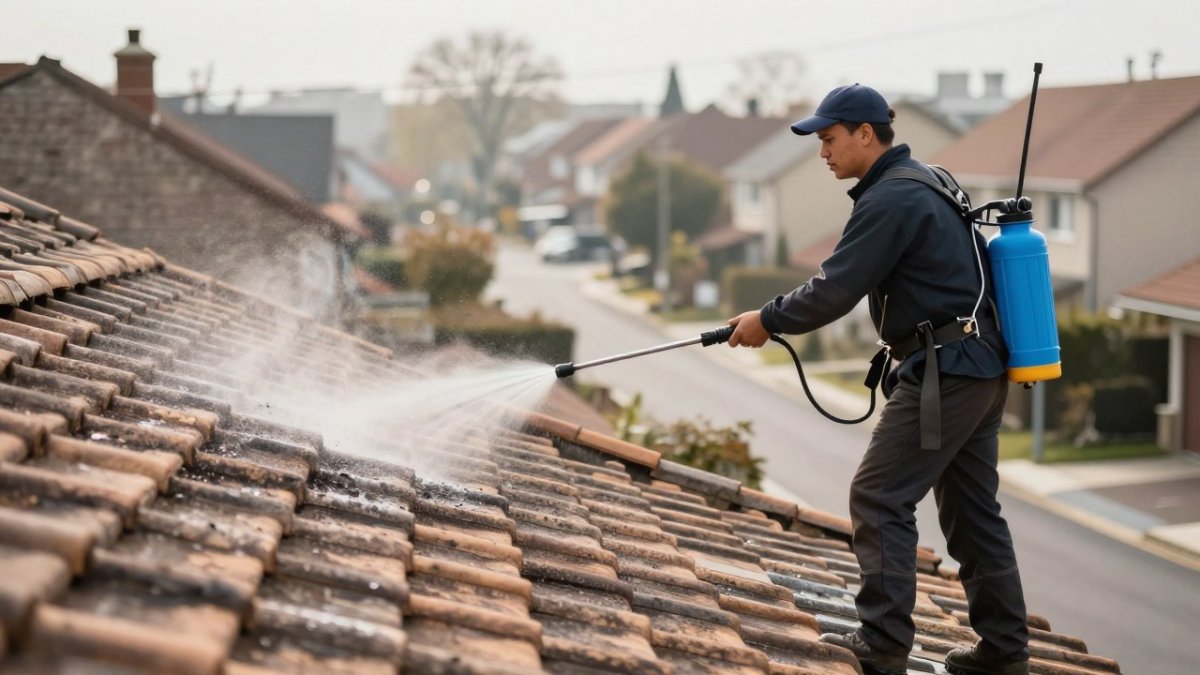
If you plan to tackle roof moss yourself, be careful. Working on a roof is risky, and a fall can cause serious injury (Health and safety in roof work). Many people prefer to hire a professional, especially for steep or high roofs.
- Check the roof and surroundings for trees, debris and blocked gutters.
- Clear loose debris and dead moss by hand where it is safe to do so.
- Apply a suitable biocide treatment according to the product instructions.
- Allow the treatment time to work before rinsing or cleaning further.
- Clear gutters and trim overhanging branches to reduce future damp.
Please read the label on any product carefully. Some treatments can harm plants, pets or water systems, so check the instructions before you start.
What You Will Need Before You Start
- A sturdy ladder and a secure working setup
- A suitable roof biocide treatment
- A soft brush or broom for loose debris
- Protective gloves and eye protection
- A way to clear gutters safely
Roof Biocide Treatment: Chemical and Eco-Friendly Options Compared
Biocide treatments kill moss at the root, which is why they are often used for roofs. Chemical options can work quickly, but they need careful handling. Eco-friendly alternatives are gentler, though they may take longer to show results.
- Chemical biocides: faster action, but need careful use around plants and pets. Find out how our chemical cleaning method works.
- Eco-friendly options: gentler on the garden, often slower to work. Learn how to choose gentler, eco-friendly exterior cleaning solutions.
- Professional application: uses suitable products and controls the spray.
Our service includes eco-friendly and dog-friendly products, so pet owners can ask about the safest choice for their home.
How Often Should You Clean a Roof to Keep Moss Away?
Most roofs under tree cover need attention about once a year. Open, sunny roofs may only need a check every two to three years. The right schedule depends on how quickly moss returns on your roof.
Check your own roof each season and act when you see fresh growth.
Booking Your Roof Moss Treatment and Next Steps
If you want a professional roof moss treatment in Milton Keynes, we can help. Our roof cleaning service covers the work from start to finish, and you can check our Milton Keynes service area to confirm we cover your home. Call us to book your clean and we will assess your roof’s exposure and advise on the best treatment plan.
Frequently Asked Questions
How long does roof moss treatment last?
How long a treated roof stays clear depends on conditions. Roofs under heavy tree cover, in damp shade or on north-facing slopes that stay wet for long periods tend to recolonise sooner. Sunny, well-drained roofs can go longer. Treatment itself works quickly, but its protection is only as long as the roof stays free of new spores and organic debris. An annual inspection helps you spot early regrowth and decide when to book the next treatment.
Does roof moss treatment stop moss coming back?
Treatment kills existing moss and leaves a residual effect that slows new growth, but it does not make a roof permanently moss-proof. Once the biocide has washed off or broken down, spores from nearby trees and damp areas can settle and grow again. Keeping gutters clear, trimming overhanging branches and scheduling a follow-up treatment when regrowth starts gives the longest clean period.
Why is moss still on my roof after treatment?
Dead moss often stays visible for several weeks after treatment. It turns brown or grey and then rinses off in rain over time. Removing it too early by pressure washing can damage tiles. Brushing or gently rinsing dead growth once it has dried is usually enough. If live green moss remains after a month, the treatment may not have reached the area, and a second application may be needed.
How often should a roof be treated for moss?
Most homes surrounded by trees benefit from regular checks, and roofs in open, sunny positions may need attention less often. Your roof’s exposure, the amount of shade, and how well the gutters drain all affect the interval. Pricing depends on roof size, access and condition, so please visit the JAG Simply Clean website or request a quote for current prices.


