
 07584 319522
How to Choose the Best Eco-Friendly Exterior Cleaning Solutions
Last Updated: October 26, 2026
Quick Summary
Eco-friendly exterior cleaning solutions balance cleaning power, environmental safety, and surface protection by using plant-based surfactants, enzymatic cleaners, and biodegradable products instead of harsh chemicals. These approaches effectively remove dirt, algae, and stains whilst protecting your garden, pets, and the materials being cleaned.
- Plant-based cleaners work by breaking down organic matter like dirt, algae, and mould on stone surfaces.
- Enzymatic cleaners contain natural enzymes that digest organic buildup and take 24 hours or more to work.
- Citrus-based degreasers and microbe-based cleaners are most effective for driveways with oil and grease stains.
- White vinegar and water in a 1:1 ratio removes algae naturally when left for 30 minutes before scrubbing.
- Avoid cleaners promising results in under 10 minutes, as they typically contain harsh chemicals.
Table of Contents
- Why Eco-Friendly Exterior Cleaning Matters
- Choosing an Eco-Friendly Patio Cleaner That Works
- Finding an Environmentally Friendly Driveway Cleaner
- How to Clean Algae From a Patio Naturally
- Pet-Safe Exterior Cleaning Products for Your Home
- What to Avoid When Selecting Eco-Friendly Solutions
- Getting Professional Eco-Friendly Exterior Cleaning
- Frequently Asked Questions
Why Eco-Friendly Exterior Cleaning Matters
Choosing the right eco-friendly exterior cleaning approach protects both your property and the environment. When you select solutions that avoid harsh chemicals, you’re reducing runoff that damages local waterways and soil. The right products make a genuine difference, not just for the planet, but for your home’s long-term condition.
The research is clear. Studies examining household use of cleaning products and their health effects show that chemical-heavy cleaners can pose risks to respiratory health and overall wellbeing. For families with children, pets, or anyone with sensitivities, this matters significantly. Beyond health, eco-friendly products tend to be gentler on surfaces themselves. They clean effectively without degrading render, stripping sealants, or leaving residue that attracts dirt faster.
The best eco-friendly exterior cleaning solutions balance three things: cleaning power, environmental safety, and surface protection. You want products that actually work, won’t harm your garden or pets, and won’t compromise the materials they’re cleaning. That’s what separates a genuine solution from greenwashing.
Choosing an Eco-Friendly Patio Cleaner That Works
An eco-friendly patio cleaner needs to handle stubborn stains without relying on bleach or phosphates. The most effective options fall into a few categories: plant-based surfactants, enzymatic cleaners, and biodegradable concentrated solutions you dilute yourself.
Plant-based cleaners work by breaking down organic matter, the dirt, algae, and mould that accumulate on stone. They’re slower than aggressive chemicals, but they’re thorough. Enzymatic cleaners go further: they contain natural enzymes that digest organic buildup at a molecular level. These take longer to work (often 24 hours or more), but the results last longer because they address the root cause rather than just the surface.
When selecting a patio cleaner, check the label for these markers: biodegradable certification, pH-neutral formulation, and no synthetic fragrances. Avoid anything claiming to work in under 10 minutes on heavy stains, that usually means harsh chemicals are doing the work. Real eco-friendly solutions need time to work properly.
Application matters as much as the product itself. Dilute concentrated cleaners according to instructions, more product doesn’t mean better results. Apply evenly, let it sit for the recommended time, then rinse thoroughly. For sealed patios, always test in an inconspicuous corner first.
| Patio Cleaner Type | Best For | Application Time | Drying Time |
|---|---|---|---|
| Plant-based surfactant | General dirt and light algae | 15-30 minutes | 2-4 hours |
| Enzymatic cleaner | Stubborn organic stains | 24 hours | 4-8 hours after rinse |
| Concentrate solution | Large areas and cost efficiency | 20-45 minutes | 3-6 hours |
Finding an Environmentally Friendly Driveway Cleaner
Driveways take more punishment than patios, oil stains, tyre marks, and weathering all accumulate. An environmentally friendly driveway cleaner needs genuine cleaning power while remaining safe for soil and groundwater.
The most effective eco-friendly options for driveways are citrus-based degreasers and microbe-based cleaners. Citrus products contain natural solvents that break down oil and grease without the toxicity of petroleum-derived solvents. Microbe-based cleaners introduce beneficial bacteria that literally consume organic residues, they’re slower but incredibly thorough for long-term prevention.
For concrete driveways, avoid aggressive pressure washing with chemicals. High-pressure water alone can damage the surface over time, especially if the concrete is older. Pair an eco-friendly cleaner with lower pressure (below 100 bar) or soft-washing techniques for better results and longer surface life.
Watch out: some budget cleaners claim to be “eco-friendly” but still contain harmful surfactants. Check for certifications like Ecolabel or similar environmental standards. If you can’t verify the ingredients, it’s probably not genuinely safe.
How to Clean Algae From a Patio Naturally
Algae growth on patios is persistent and frustrating. Learning how to clean algae from a patio naturally saves money and keeps your outdoor space safe for barefoot children and pets.
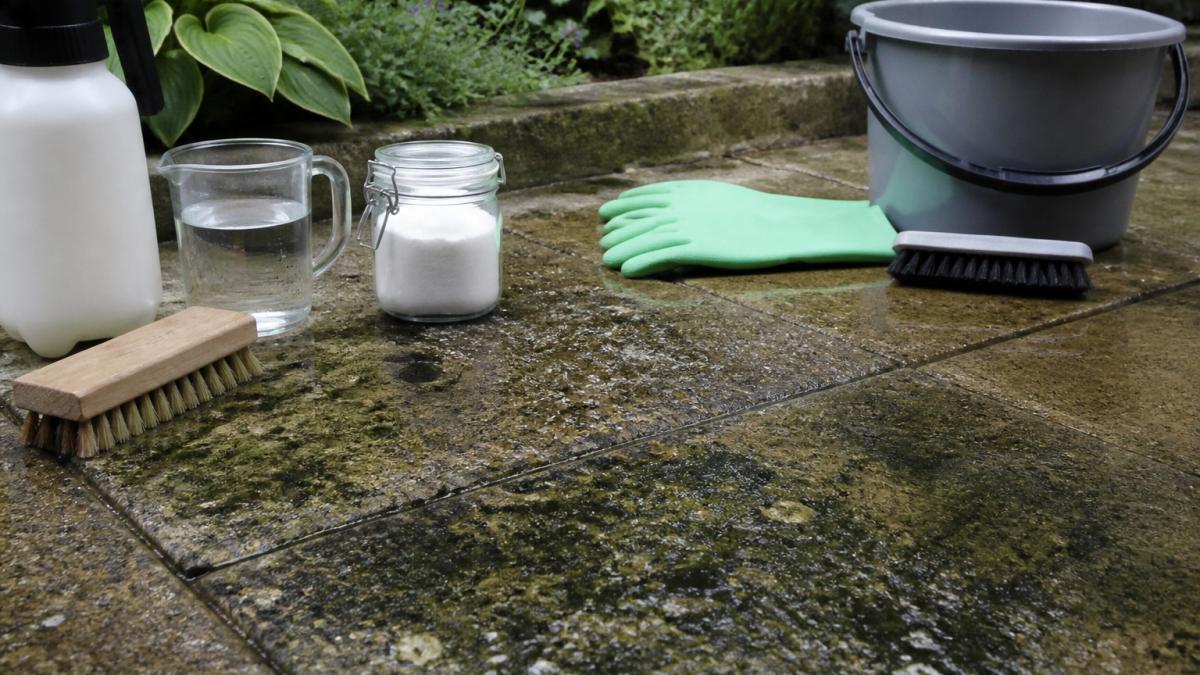
The most effective natural approach combines physical removal with biological treatment. Start by scrubbing affected areas with a stiff brush, this removes loose algae and opens up the stone surface. Follow with a solution of white vinegar and water (1:1 ratio) or a plant-based cleaner. Let it sit for 30 minutes, then scrub again and rinse thoroughly.
For stubborn algae, a bicarbonate of soda paste works well. Mix bicarbonate of soda with water until it reaches a thick consistency, apply it to affected areas, and let it sit overnight. The slight alkalinity helps break down algae without harming the stone or your garden.
Prevention is where natural methods truly shine. After cleaning, ensure proper drainage so water doesn’t pool. Trim nearby vegetation to increase sunlight exposure, algae thrives in damp, shaded areas. A light annual wash with diluted vinegar or plant-based cleaner keeps algae from establishing itself.
The key insight most people miss: algae returns quickly if you don’t address moisture. A patio that dries fast stays clean longer, regardless of the cleaner you use.
Pet-Safe Exterior Cleaning Products for Your Home
If you have dogs, cats, or other pets that spend time outside, pet-safe exterior cleaning products are non-negotiable. Many standard cleaners contain ingredients that irritate paws, cause skin reactions, or pose risks if ingested during grooming.
True pet-safe products avoid these ingredients: phenol, ammonia, bleach, and synthetic pesticides. Look for cleaners specifically labelled as pet-safe or formulated for homes with animals. These typically use plant-based surfactants, essential oils (in safe concentrations), or enzymatic formulas that break down dirt without chemical residue.
Application technique matters with pets. After cleaning, rinse the area thoroughly, any residue left on surfaces can irritate paws or be ingested during grooming. Allow surfaces to dry completely before letting pets back outside. For patios and driveways, this usually takes 2-4 hours depending on weather.
Some pet owners use salt-based products for de-icing in winter, thinking they’re safer than chemical alternatives. They’re not, salt irritates paws just as much and damages concrete over time. Stick with pet-safe, non-toxic alternatives for winter maintenance too.
What to Avoid When Selecting Eco-Friendly Solutions
Not all products labelled “eco-friendly” deliver on that promise. Understanding what to avoid protects your investment and ensures you’re actually making an environmental difference.
Avoid cleaners with “greenwashing” claims. If a product says it’s “natural” but lists synthetic chemicals you can’t pronounce, it’s not genuinely eco-friendly. Read the full ingredient list. Avoid anything containing EDTA (ethylenediaminetetraacetic acid), which persists in waterways and accumulates in soil.
Skip products that promise results in unrealistic timeframes. A cleaner that works in 5 minutes on heavy stains is almost certainly relying on harsh chemicals. Real eco-friendly solutions take longer because they work differently, they break down dirt gradually rather than stripping surfaces aggressively.
Avoid mixing cleaners, even “natural” ones. Vinegar and bicarbonate of soda together create a fizzy reaction that looks impressive but doesn’t actually clean better than either alone. Mixing different products can create unexpected chemical reactions, even with plant-based solutions.
Don’t assume expensive means better. Some of the most effective eco-friendly cleaners are simple, inexpensive options like vinegar, baking soda, or castile soap. The cost reflects branding and packaging, not cleaning power. Test budget options on small areas first, you might be surprised.
Getting Professional Eco-Friendly Exterior Cleaning
For large properties, stubborn stains, or surfaces you’re unsure about treating yourself, professional eco-friendly exterior cleaning offers expertise and equipment that deliver faster, more thorough results.
Professional cleaners bring several advantages. They understand which cleaning methods suit different surfaces, soft washing for delicate render, low-pressure rinsing for sealed stone, or specialised techniques for specific stains. They also have access to professional-grade eco-friendly products that aren’t available to consumers, along with equipment that applies them efficiently.
JAG Simply Clean has over 20 years of experience. We use soft-washing and DOFF steam cleaning methods that clean effectively without damaging surfaces. Our eco-friendly and pet-friendly product options mean your family and pets stay safe while your exterior gets genuinely restored.
When choosing a professional service, ask these questions: What products do they use, and can they provide ingredient lists? What cleaning methods do they employ for different surfaces? Do they offer guarantees on their work? Can they provide references from recent jobs?
Professional cleaning also prevents costly mistakes. Pressure washing render incorrectly can cause water ingress and structural damage. Applying the wrong cleaner to sealed stone can strip the sealant. These errors cost far more to fix than professional cleaning would have cost initially.
Maintaining pristine exteriors shouldn’t mean compromising on safety or environmental responsibility. The right eco-friendly solutions, whether DIY or professional, deliver genuine results while protecting what matters most. Call Us To Book Your Clean with JAG Simply Clean, and discover how 20+ years of expertise in eco-friendly and pet-friendly exterior restoration can transform your property’s appearance and longevity. We handle everything from algae removal to complete exterior restoration.
Frequently Asked Questions
What is the best eco-friendly solution for cleaning a house exterior?
The best eco-friendly exterior cleaning solution depends on the surface and type of soiling. Soft washing uses low-pressure water with biodegradable cleaning agents and works well for delicate surfaces like render and wood. For tougher jobs, DOFF steam cleaning uses heat and minimal chemicals. Many homeowners also find success with natural alternatives like vinegar and water solutions for light cleaning, though professional-grade eco-friendly products deliver faster, longer-lasting results on heavily soiled areas.
Are eco-friendly exterior cleaning products safe for pets and plants?
Genuinely eco-friendly and pet-safe exterior cleaning products are formulated to break down naturally and avoid toxic residues that harm animals or plant life. Look for biodegradable formulations and products tested for pet safety. However, it’s wise to keep pets away from the cleaned area during application and until surfaces dry. Always confirm with your cleaning provider that they use certified pet-safe products, this is especially important if your household includes dogs or cats sensitive to chemical exposure.
Can you clean a driveway without using harsh chemicals?
Yes. Soft washing and low-pressure techniques combined with biodegradable detergents can clean driveways effectively without harsh chemicals. For lighter soiling, a pressure washer at reduced PSI (pounds per square inch) with water alone may suffice. Steam cleaning is another chemical-free option that uses heat to break down dirt and algae. The best method depends on the driveway material and how heavily soiled it is, some surfaces like asphalt respond well to gentler approaches, while others benefit from professional eco-friendly treatment.
How long do the results of eco-friendly exterior cleaning last?
Results vary based on the cleaning method, local climate, and surface type. Soft washing with biodegradable treatments typically prevents regrowth for 12-18 months on many surfaces, as the products inhibit mould and algae formation. Steam cleaning results may last 6-12 months depending on exposure to moisture and shade. Regular maintenance, such as annual cleaning or spot treatment, extends the lifespan of your results and keeps your exterior looking fresh longer.


