
 07584 319522
Preventing Organic Growth on Exterior Walls: 2026 Guide
Last Updated: 23 October 2026
Quick Summary
Preventing organic growth on exterior walls means fixing the moisture, shade and porous surfaces that let it return, not just cleaning the green staining you can see. Clean the wall, correct drainage and shade, then seal dry surfaces and keep to a year-round maintenance plan.
- North-facing and shaded elevations stay damp longest after rain, so they are the walls most prone to growth.
- Soft washing uses low pressure with specialist solutions to kill growth at the root without damaging render.
- Kill the growth before rinsing, then let the wall dry fully before resealing it.
- Clear gutters, fix leaking downpipes and prune overhanging trees so walls dry faster.
- Inspect walls in spring, treat shaded elevations in summer and clear drains in autumn.
Table of Contents
- Why Organic Growth Keeps Coming Back on Exterior Walls
- Why Algae Grows on Walls: Moisture, Shade and Surface Type
- Exterior Wall Cleaning Methods Compared: Soft Washing, Pressure Washing and Steam
- How to Remove Algae from Exterior Walls Safely
- Preventing Algae Growth After Rain: Drainage, Shade and Surface Protection
- Preventing Organic Growth on Exterior Walls: A Year-Round Maintenance Plan
- Frequently Asked Questions
Why Organic Growth Keeps Coming Back on Exterior Walls
Preventing organic growth on exterior walls fails for one reason: most people treat the green staining as a cleaning problem when it is a moisture problem. At JAG Simply Clean, we have spent over 20 years in the industry, and the pattern is always the same. The growth comes back because nothing about the wall changed.
Field research led by M. Nakajima’s survey of algal growth on building exteriors examined which wall locations are most prone to algal colonisation and how environmental conditions drive it. The lesson is blunt: if a surface stays damp and shaded, algae will recolonise it no matter how thoroughly you clean.
Here is what most guides get wrong. They list cleaning methods and stop there. Cleaning removes the growth you can see. Prevention addresses the conditions that invited it. Below, we break down why growth returns, how to remove it safely, and how to build a maintenance plan that keeps walls clear through wet winters.
Why Algae Grows on Walls: Moisture, Shade and Surface Type
Algae grows on walls because three conditions line up: persistent moisture, reduced sunlight, and a porous surface that holds water. Remove any one of those and growth slows dramatically. Leave all three in place and you are fighting a losing battle.
North-facing and shaded elevations stay damp longest after rain. Rendered and porous masonry surfaces absorb and hold that moisture. PROSOCO’s technical note on removing biological growth notes that moss growth can be inhibited by reducing water availability through proper drainage or by increasing direct sunlight exposure. Neither is a quick fix, but both attack the cause rather than the symptom.
Surface type matters more than most homeowners realise. A smooth, well-sealed wall sheds water. Cracked render, failing paint and unsealed stone give algae somewhere to anchor.
Run your hand across a shaded wall a day after rain. If it still feels cool and damp, that elevation will always be your problem wall. Prioritise drainage and surface sealing there first.
Exterior Wall Cleaning Methods Compared: Soft Washing, Pressure Washing and Steam
Three exterior wall cleaning methods dominate, and choosing the wrong one risks the surface you are trying to protect. Soft washing uses low pressure with specialist cleaning solutions to kill growth at the root. Pressure washing blasts debris away with high-pressure water. Steam cleaning uses heat to lift growth from delicate surfaces.
Guidance on preventing and removing algae and moss from home exteriors highlights soft or gentle pressure washing as an approach for removing organic growth, with periodic cleaning preventing the build-up of the substances algae and moss feed on. The distinction between soft and high pressure is not marketing. It is the difference between cleaning render and cracking it.
| Method | Pressure Level | Best For | Risk |
|---|---|---|---|
| Soft washing | Low | Render, painted walls, delicate surfaces | Low |
| Pressure washing | High | Brick, concrete, hard paving | Can damage render and guttering |
| Steam cleaning | Low, high heat | Delicate or historic surfaces | Low, slower process |
If you want to understand the low-pressure approach in detail, read our guide to soft washing before choosing a method. For harder surfaces, our pressure washing guide explains where high pressure is appropriate and where it is not.
How to Remove Algae from Exterior Walls Safely
Removing algae safely means killing the growth before you rinse it, not blasting live spores across the wall. Follow these steps:
- Assess the surface. Check for cracks, failing render or loose paint. Repair before cleaning, or water gets behind the surface.
- Protect surroundings. Cover plants and move pet bowls. Even eco-friendly products need care around borders.
- Apply a suitable cleaning solution. Treat the wall and let it dwell so the growth is killed at the root.
- Rinse at low pressure. Wash the dead growth away without forcing water into the surface.
- Let it dry fully. Do not reseal a damp wall; trapped moisture restarts the cycle.
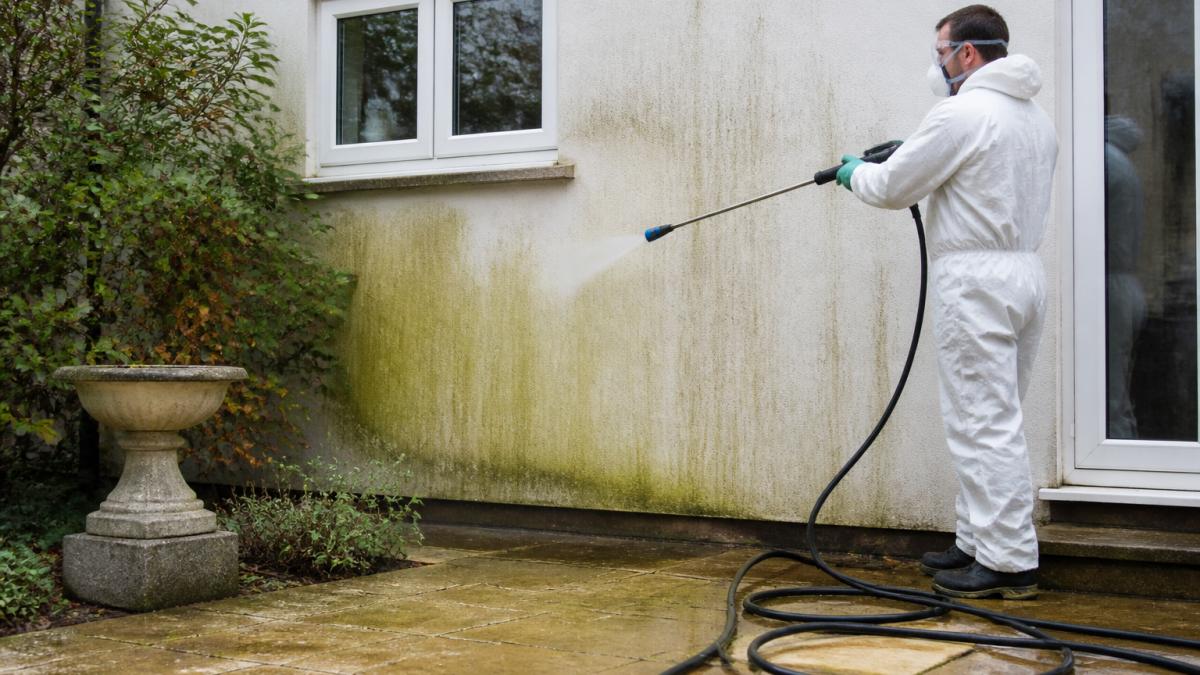
Chemical cleaning is what separates a lasting result from a cosmetic one. If you have pets or children, ask any provider what products they actually use. We offer eco-friendly and dog-friendly options because “pet-friendly” should mean a different product, not a different label.
Preventing Algae Growth After Rain: Drainage, Shade and Surface Protection
Preventing algae growth after rain comes down to three levers: move water away, reduce shade, and protect the surface. Rain itself is not the enemy. Water that cannot drain or dry is.
Start with drainage. Clear gutters, fix leaking downpipes and check that water is not pooling at the base of walls. Then look at shade: pruning back overhanging trees and shrubs lets sun and air reach the wall and dry it faster. Finally, protect porous surfaces with an appropriate sealer once the wall is clean and dry.
Sealing a wall that still has active growth or trapped moisture locks the problem in. The algae dies back briefly, then returns under the coating and lifts it. Always clean, dry and treat before sealing.
Render is especially prone to holding moisture, so it rewards a dedicated approach. Our render cleaning service cleans and protects this common exterior surface.
Preventing Organic Growth on Exterior Walls: A Year-Round Maintenance Plan
Preventing organic growth on exterior walls works best as a calendar, not a one-off job. Growth is seasonal, so your maintenance should be too. Here is the plan we recommend to homeowners and property managers:
- Spring: Inspect walls after winter, clear gutters, and book a clean before growth spreads.
- Summer: Treat shaded elevations and reseal any porous surfaces while they are dry.
- Autumn: Clear fallen leaves from drains and check downpipes before the wet season.
- Winter: Monitor problem walls and book a treatment at the first sign of green staining.
Research on assessing mould risk in residential walls underlines how much wall performance depends on moisture management over time. The principle applies to algae just as much: consistent control beats occasional deep cleans.
A recurring plan is cheaper than repeated restoration. If you would like us to build one around your property, get in touch and we will talk through what your walls actually need.
Frequently Asked Questions
What causes algae to grow on exterior walls?
Algae spores are carried by wind and rain and settle on any outdoor surface. They need moisture and a food source to develop, and exterior walls supply both. North-facing walls stay damper for longer, shaded areas dry out slowly, and rough render or pebbledash traps water. Research by Nakajima (2020) confirmed that wall position and local environmental conditions directly influence where algal growth appears. Once a thin film forms, it holds more moisture and spreads.
How can I prevent green algae from growing on my walls?
Reduce the moisture the algae needs. Clear gutters and fix leaking downpipes so water is not running down the wall. Cut back shrubs that keep the wall in shade. Clean the wall properly with a suitable treatment, then apply a residual protector to slow regrowth. PROSOCO guidance notes that moss growth can be inhibited by reducing water availability through proper drainage or by increasing direct sunlight exposure. A planned maintenance clean every 12 to 18 months keeps organic growth from establishing.
Does pressure washing stop algae from coming back?
Pressure washing removes the visible growth, but it does not stop it returning. Blasting alone can also force water into render and masonry, which creates the damp conditions algae need. Soft washing with a low-pressure application of a suitable cleaning solution kills the growth at the root and is safer for render, painted finishes and older brickwork. For long-term control, pair soft washing with a residual protector and fix the drainage and shade issues that caused the growth.
How do you remove algae from an exterior wall safely?
Start with a low-pressure soft wash using a suitable exterior cleaning solution, applied from the bottom up and rinsed from the top down. Protect plants and pets, and avoid harsh chemicals near ponds or lawns. For delicate surfaces such as render or painted masonry, DOFF steam cleaning is an option.
What is the best treatment for moss and algae on walls?
The best treatment depends on the surface. Soft washing suits render, painted walls and most masonry. DOFF steam cleaning is better for delicate or historic surfaces where chemicals and pressure could cause damage. After cleaning, a residual protector slows regrowth by making the surface less hospitable to spores. Research by Choi (2022) examined staining on sloped walls and proposed basic preventive measures, underlining that treatment should be paired with changes to drainage and surface protection rather than cleaning alone.
How often should exterior walls be cleaned?
Most walls benefit from a professional clean every 12 to 18 months. Walls in heavy shade, near trees or on exposed north-facing elevations may need cleaning every 9 to 12 months. A light maintenance wash in spring removes winter growth before it spreads, and an autumn clean clears debris that traps moisture. Commercial properties with a public-facing frontage often schedule cleaning twice a year to keep the building looking maintained.
Can damp or shaded walls encourage organic growth?
Yes. Damp and shade are the two conditions algae and moss need most. A wall that stays wet after rain, or sits in the shadow of a tree or neighbouring building, dries slowly and gives spores time to establish. Cabrera (2026) used hygrothermal and mould-growth simulation to assess mould risk in existing residential walls, showing that moisture behaviour inside the wall matters as much as surface damp. Fixing leaks, improving drainage and trimming vegetation removes the conditions that let growth thrive.
Organic growth will always find a damp, shaded wall. The challenge is staying ahead of it rather than chasing it. JAG Simply Clean brings over 20 years of experience, qualified soft washing and DOFF steam cleaning, and eco-friendly and dog-friendly product options to every job. Get started with JAG Simply Clean and keep your exterior clear of algae, moss and mildew all year.


