
 07584 319522
How to Clean Moss From a Roof Safely: A Step-by-Step Guide
Quick Summary
To clean moss from a roof safely, check first whether it can be treated from the ground, which avoids the fall risk entirely. If you must go up, use a stable ladder or platform, never work on a wet roof, and brush gently before applying a moss treatment. Use a clean moss roof method suited to your tile type.
- Treat light moss from the ground wherever practical, as this removes the fall risk entirely.
- Never work on a wet or frosted roof, since wet moss is a slip hazard.
- Use a soft-bristled brush on slate and a stiff brush on concrete tiles.
- Avoid pressure washing tiles, as high pressure can strip coatings and force water under them.
- Remove dead moss after treatment, because it holds moisture and invites regrowth.
Table of Contents
- Why Moss Grows on Roofs and Why Safety Comes First
- Assessing the Moss and Your Roof Before You Start
- Roof Moss Removal Tools and What to Choose for Your Roof
- How to Remove Moss From Roof Tiles Step by Step
- Can You Pressure Wash Roof Tiles?
- What Roof Moss Removal Typically Involves in Cost Terms
- Booking a Professional Roof Clean With JAG Simply Clean
- Frequently Asked Questions
Why Moss Grows on Roofs and Why Safety Comes First
Last Updated: November 7, 2026
Cleaning moss from a roof may look like a minor job, but moss holds moisture against tiles and can slowly lift and damage the surface beneath. Moss most often appears on north-facing slopes, shaded valleys and areas under overhanging trees, where roofs stay damp for longer. Cleaning it is a job worth doing, but getting it wrong can cost you far more than the moss ever would.
Moss thrives where moisture lingers, light is limited and debris collects. Gutters that overflow, shaded ridges and roof valleys are typical trouble spots. Once it takes hold, moss spreads quickly in damp weather.
Safety comes first for one simple reason: a roof is one of the most dangerous places to work. Wet moss is slippery, tiles can crack under weight, and a fall from height can cause serious injury. Before you touch a brush, work through the decision below.
Decide first: can this be done from the ground?
Light moss on a low-pitched roof can often be treated from the ground, which removes the fall risk entirely and is the safest choice wherever it is practical.
If the roof is two storeys or higher, steeply pitched, has a fragile covering such as old slate or asbestos cement, or shows sagging, cracked or missing tiles, do not climb. Book a professional. The same applies if the weather is wet, frosty or windy, or if you would be working alone with no one to raise the alarm.
If you must go up, follow the hierarchy
Work at height regulations in the UK require that work at height is avoided where possible, and where it cannot be avoided, that it is done from a suitable platform with fall protection. For a domestic roof clean that means:
- Avoid standing on the roof wherever a long-handled tool or ground-level treatment will do the job.
- Prevent falls by using a stable ladder or, better, a tower scaffold or mobile elevating work platform for anything beyond a simple gutter-line reach.
- Mitigate the consequences with a harness anchored to a suitable point, and never rely on a ladder as a working platform for prolonged brushing.
A ladder should be footed on firm, level ground, secured at the top, and extend at least one metre above the gutter line so you have a handhold when stepping off (Safe use of ladders and stepladders). Keep three points of contact at all times and do not overreach, move the ladder rather than lean.
HSE guidance on working at height
The pre-start checks that matter
- Never work on a wet or frosted roof, wet moss is effectively a slip hazard.
- Check the forecast: dry, still, good light, and no rain for at least 24 hours after treatment.
- Tell someone where you are, keep a phone on you and agree a check-in time.
- Wear non-slip footwear, gloves and eye protection when handling treatments.
- Keep the area below clear of people, pets and parked cars before anything falls.
Watch out: a ladder that is long enough but not secured at the top is one of the most common causes of falls on domestic jobs, if you cannot secure it, do not use it.
Assessing the Moss and Your Roof Before You Start
A quick check tells you how bad the problem is and which method to use. Look at the roof from ground level with binoculars first, then decide whether you can safely work on it yourself.
Identify the covering before you choose a method
Different coverings react very differently to brushing, scraping and chemicals, so the first job is to know what you are standing on (or working above).
- Slate: soft, brittle and easily cracked. Use a soft-bristled brush only, never a scraper or wire brush, and avoid walking on the roof at all, slate beds and fixings are easily disturbed. Chemical treatments should be checked against the manufacturer’s guidance for natural stone.
- Clay tiles: generally robust, but older clay can be porous and brittle. A stiff brush is usually fine; avoid metal scrapers and keep treatment dwell times to the label.
- Concrete tiles: the most forgiving common covering. A stiff yard brush and plastic scraper are suitable, and most proprietary moss treatments are labelled for concrete.
- Flat roofs (felt, EPDM, GRP): do not brush aggressively or walk on them in warm weather when the surface softens. Use a soft brush or gentle rinse, and check seams and upstands for damage before and after.
- Asbestos cement: common on older garages and outbuildings. Do not brush, scrape or pressure wash, disturbed fibres are a health hazard. Leave it to a licensed contractor.
Judge the type and amount of growth
- Light growth: thin green patches that brush off easily, often treatable from the ground.
- Heavy growth: thick mats that hold water and need scraping, plan for more time and more debris.
- Dead moss: brown or grey and crumbly, easier to remove but still worth clearing, as it holds water and blocks gutters.
Check the gutters and downpipes at the same time, because blocked drainage often causes the damp that lets moss return. Note any valleys, ridges and north-facing slopes, which stay damp longest and will need the most attention.
Inspect for damage before and after cleaning
A moss clean is the best opportunity you will get to spot problems early. Before you start, look for slipped, cracked or missing tiles, lifted flashing around chimneys and vents, and sagging areas. After cleaning, re-check the same points: moss often hides cracked tiles and failed mortar, and removing it can reveal a leak that was already there. Clear gutters and downpipes, check that water runs freely to the drain, and look for damp patches on ceilings inside the property in the days afterwards.
Watch out: moss can bridge a cracked tile or a gap in flashing and mask a leak, if you find damp or staining once the moss is gone, treat it as a repair job before any further treatment.
Roof Moss Removal Tools and What to Choose for Your Roof
The right tools protect your roof as much as they clean it. Choose softer tools for older or delicate tiles and stronger ones for heavy, well-established growth.
- Stiff yard brush: good for most concrete and clay tiles
- Soft-bristled brush: safer for slate and older tiles
- Plastic scraper: lifts thick moss without scratching the surface
- Wire brush: avoid on most roofs, as it can damage the tile coating
- Garden hose or bucket of clean water: for rinsing away loosened debris
Avoid metal tools on most roofs, since they scratch the surface and speed up wear. Keep your tools clean between tiles so you do not spread spores across the roof.
How to Remove Moss From Roof Tiles Step by Step
Work in dry weather and plan on one section at a time. This keeps you safe and stops moss from dropping onto your garden or drains.
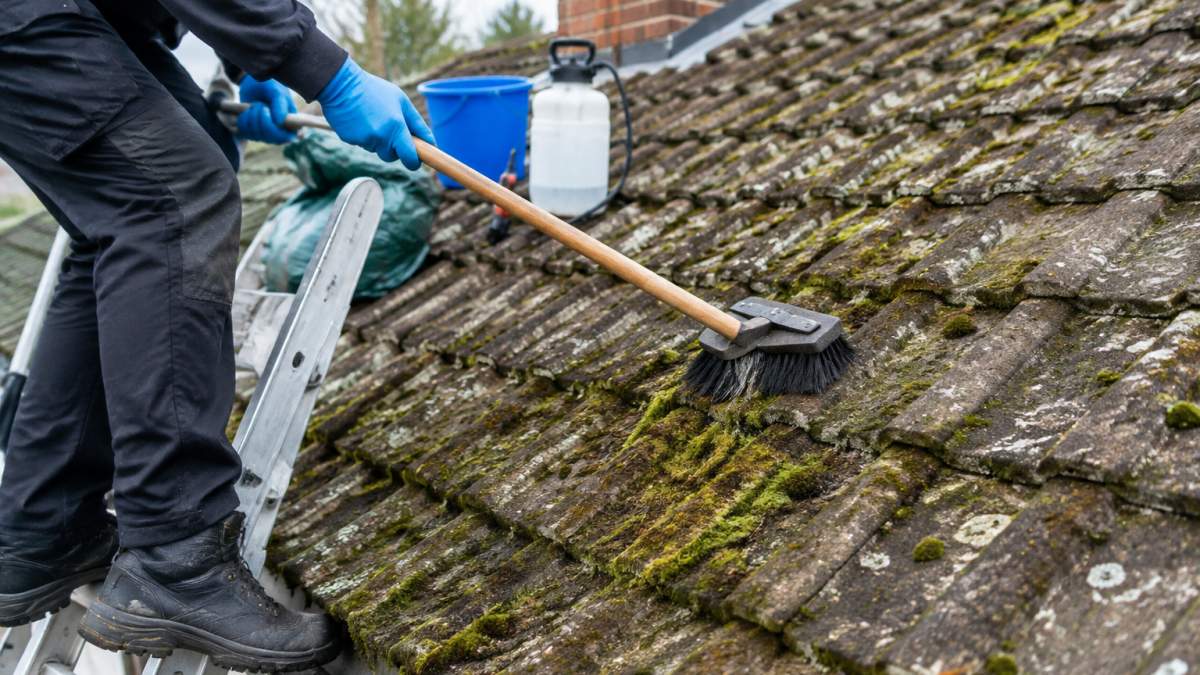
- Check the weather. Start only on a dry day with no rain forecast for at least 24 hours.
- Brush the moss. Use a stiff or soft brush, depending on your tiles, and brush upwards to lift the growth.
- Scrape stubborn patches. Use a plastic scraper to lift heavy mats gently.
- Apply a moss treatment if needed. Follow the label on a commercial moss-killing treatment, and let it dwell for the time the instructions state.
- Rinse or sweep away the dead moss. Rinse with clean water or sweep the debris into a bag.
- Clear the gutters. Remove any moss and leaves that have collected there.
Moss treatments kill the growth but do not stop it returning, so the dead material should still be removed. Leaving dead moss in place holds moisture and can invite fresh growth.
Oregon State University guidance on roof moss removal
The steps below summarise the removal process, with the points that matter most for keeping the roof and yourself safe.
| Step | What to do | Time or frequency |
|---|---|---|
| Check the weather | Start only on a dry day | No rain for at least 24 hours |
| Brush the moss | Brush upwards with a stiff or soft brush | Work one section at a time |
| Scrape stubborn patches | Lift heavy mats gently with a plastic scraper | As needed |
| Apply moss treatment | Follow the label on a commercial treatment | Let it dwell for the stated time |
| Rinse or sweep away dead moss | Rinse with clean water or sweep into a bag | After treatment |
| Clear the gutters | Remove moss and leaves that have collected | Final step |
Can You Pressure Wash Roof Tiles?
Pressure washing is generally not recommended for roof tiles, as high-pressure water can strip protective coatings and force water under tiles.
Brushing and gentle rinsing with a garden hose are safer choices. If you do use a machine, keep it on the lowest setting and never aim it at the joints between tiles.
What Roof Moss Removal Typically Involves in Cost Terms
Pricing depends on quantity, dates, and delivery.
Visit the JAG Simply Clean website for current prices or to request a quote.
Booking a Professional Roof Clean With JAG Simply Clean
If the roof is steep, high or heavily damaged, a professional is the safer choice. JAG Simply Clean has more than 20 years of experience and is a family-run business based in Milton Keynes. We offer soft washing and eco-friendly, pet-friendly options.
Call us to book your clean, or visit our roof cleaning page to learn more about the service.
JAG Simply Clean helps homeowners protect their roofs with safe, careful cleaning. Moss can return quickly if the roof stays damp, so a professional clean with a follow-up plan can keep it under control. Call us to book your clean and get your roof looking its best.
Frequently Asked Questions
How do you safely remove moss from a roof?
Start by checking the weather and choosing a dry day. Work from a stable ladder set on firm ground, with a second person nearby, or leave the job to a professional if the roof is steep, fragile or high. Gently brush the moss away with a stiff brush, working from the ridge downwards, and avoid walking on fragile tiles. Rinse away loose debris with clean water, keep chemicals diluted and follow the label instructions, and wear gloves and eye protection throughout.
Can you remove moss from roof tiles without damaging them?
Usually yes, if you use gentle manual methods. A soft or stiff yard brush is generally safer than a wire brush or scraper, which can chip or score tiles. Work carefully and avoid forcing debris under the tiles. Check the tiles afterwards for cracks or displacement. Concrete and clay tiles can react differently, so if you are unsure about the material or its condition, ask a roofer before you begin.
Is it safe to pressure wash a roof?
High-pressure washing is not generally recommended for roofs. It can force water under tiles, loosen mortar and ridge fixings, damage the surface and drive debris into gutters and drains. Cleaning by brushing and gentle rinsing is usually the safer option. If you are considering pressure washing, ask a professional who has experience with your roof material and can explain how they will protect the surface.
When should you hire a professional to clean roof moss?
Consider a professional if the roof is steep, high, fragile or in poor repair, if you cannot access it safely, or if the moss covers a large area. Professionals can also check for loose tiles, damaged ridges and blocked gutters after cleaning. Ask about their experience, insurance and methods, and request a written quote so you can compare the scope of work before you agree.


