
 07584 319522
How to Remove Oil Stains From a Driveway Properly
Last Updated: November 8, 2026
Quick Summary
To remove oil stains from a driveway, absorb first and clean second: cover the stain with cat litter, sand or cornflour for at least 30 minutes, sweep it up, then scrub with a washing-up liquid solution and rinse. Old set-in concrete stains need a powdered laundry detergent paste left overnight.
- Deal with a fresh spill within the first hour if you can.
- Leave absorbent material on the stain for at least 30 minutes.
- Soak detergent on the stain for 10 to 15 minutes before scrubbing.
- Never use toilet bowl cleaner on asphalt or block paving.
- Top up jointing sand once block paving is dry.
Table of Contents
- Why Oil Stains Need Treating Differently on Every Driveway Surface
- Safety and Environmental Rules Before You Start
- Step-by-Step: How to Remove Oil Stains From a Driveway
- How to Remove Old Oil Stains From Concrete
- How to Remove Oil From Block Paving
- Choosing the Best Driveway Oil Stain Remover
- Pressure Washing Oil Stains From a Driveway: What Works and What Doesn’t
- Book a Professional Driveway Clean With JAG Simply Clean
- Frequently Asked Questions
Why Oil Stains Need Treating Differently on Every Driveway Surface
Oil stains are among the most common driveway blemishes, and they are also among the most misunderstood. A drop of engine oil can spread across a surprising area, and once it soaks in, the surface holds it like a sponge.
Here is the problem most guides skip: your driveway is not one material. Concrete, asphalt and block paving each hold oil differently, and a method that rescues one can wreck another.
Concrete, Asphalt and Block Paving: What Changes
Concrete is porous and alkaline. Oil sinks into the pores and binds with the surface, so stains often look darker and set faster. Asphalt is a bitumen mix, and harsh solvents can soften the binder that holds the stones together. Block paving has joints and sand between the blocks, so oil creeps sideways as well as down.
That difference decides your method:
- Concrete: absorbents plus detergent work well; avoid strong acid cleaners.
- Asphalt: gentle degreasers only; no aggressive scrubbing that lifts aggregate.
- Block paving: lift the stain, then re-sand the joints afterwards.
Watch out: scrubbing a block-paving stain hard pushes oil deeper into the jointing sand, and you will be chasing it for weeks.
Safety and Environmental Rules Before You Start
Before you touch a stain, think about where the runoff goes. Driveway cleaning water often runs into surface drains, and in the UK those drains frequently feed straight into local watercourses. That makes what you pour a pollution question, not just a cleaning one.
Follow these basics:
- Wear gloves and eye protection with any detergent or solvent.
- Work in ventilated, open air and keep pets and children away until dry.
- Never mix cleaning products, especially anything containing bleach with acids.
- Soak up dirty water with absorbent granules rather than hosing it down the drain.
- Check your local council’s guidance on disposal of oil-soaked waste before binning it.
For guidance on runoff and household chemical disposal, the Environment Agency pollution prevention advice is a sensible starting point.
Step-by-Step: How to Remove Oil Stains From a Driveway
Learning how to remove oil stains from a driveway comes down to one rule: absorb first, clean second. Skip the absorbing stage and you simply spread the oil around.
Total time: 30 minutes plus drying
Difficulty: Beginner
What you’ll need:
- Absorbent material (cat litter, sand or cornflour)
- Washing-up liquid or powdered laundry detergent
- Stiff scrub brush and push broom
- Bucket of warm water and a garden hose
- Rubber gloves
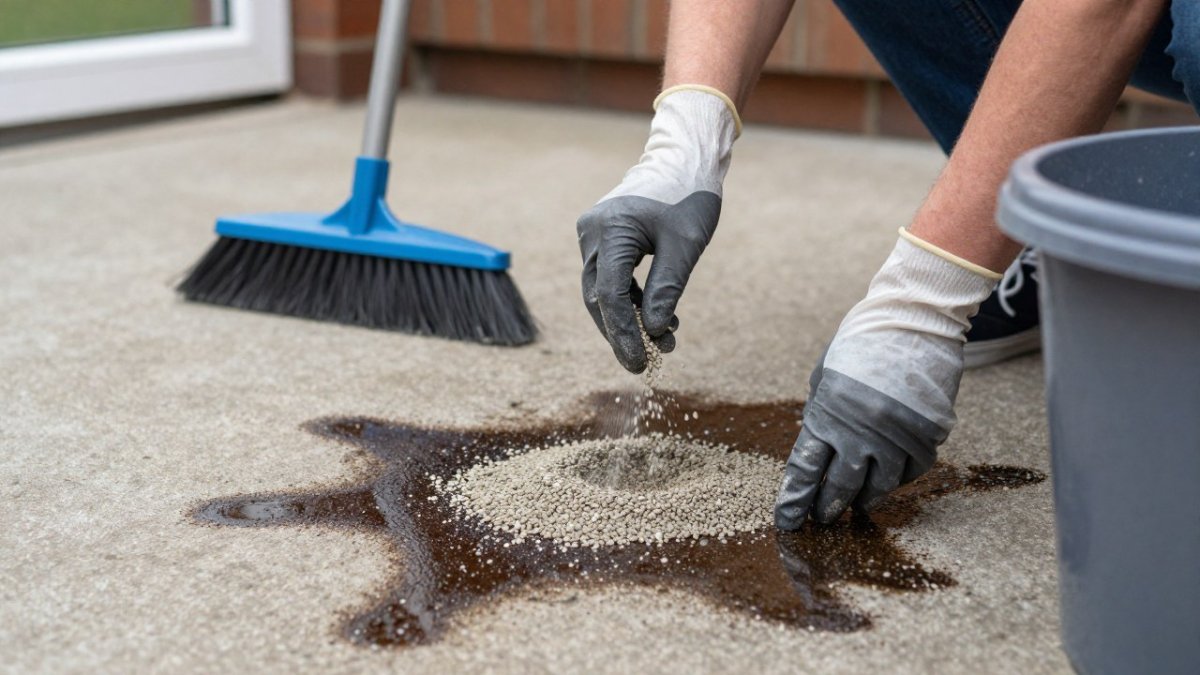
Absorbing a Fresh Oil Spill
A fresh stain is your best chance. Deal with it within the first hour if you can.
- Sprinkle a thick layer of cat litter, sand or cornflour over the whole stain.
- Leave it to work for at least 30 minutes, longer for a heavier spill.
- Sweep it up and bag it for proper disposal.
- Repeat with fresh absorbent until no more oil lifts.
Powdered laundry detergent also works as an absorbent and starts breaking down the oil at the same time. Bicarbonate of soda is a decent standby for small, light marks.
Applying Detergent or Washing-Up Liquid
Once the bulk of the oil is gone, tackle what is left.
- Mix a few drops of washing-up liquid into a bucket of warm water.
- Pour it over the stain and leave it to soak for 10 to 15 minutes.
- Scrub with a stiff brush, working from the outside in.
- Rinse with a garden hose and check the result.
Repeat the cycle if the stain is still visible. Patience beats force here.
How to Remove Old Oil Stains From Concrete
Old oil stains on concrete need more persuasion. The oil has had time to set, so surface detergent alone often will not shift it. Before you start, judge the severity so you do not waste effort on the wrong method.
Judge the Stain First
- Surface film: a dark sheen that has not soaked in. A washing-up liquid wash and scrub usually clears it.
- Set-in stain: the concrete looks permanently darker and water beads differently over it. Move to the paste method below.
- Deep contamination: the stain has been there for months, feels slightly soft, or returns after treatment. Expect several cycles, and accept that a shadow may remain.
The Paste Method for Set-In Stains
- Mix powdered laundry detergent with a little warm water to a thick paste.
- Spread it thickly over the stain, working it into the pores with a brush.
- Cover with cling film and leave for several hours, ideally overnight.
- Scrub, then rinse thoroughly and let the concrete dry before judging the result.
Repeat the cycle two or three times before deciding the stain has beaten you.
When to Escalate
For stubborn set-in marks, a specialist concrete degreaser is the reliable route. Apply, leave to work as the label directs, then rinse thoroughly. White vinegar can help lift lighter residue, and a small amount of toilet bowl cleaner is a trick some use on concrete only. Never try that on asphalt or block paving.
Watch out: acid-containing products etch concrete and can burn skin, so wear gloves and eye protection and never mix them with bleach-based cleaners.
If repeated treatment leaves a permanent shadow, the oil has penetrated too deeply for surface cleaning and a professional clean or a resurfacing decision is the realistic next step. The Royal Society for the Prevention of Accidents home safety guidance is worth a read on storing and handling cleaning chemicals safely.
How to Remove Oil From Block Paving
Block paving needs a gentler hand. The blocks themselves clean up reasonably well, but the jointing sand traps oil and holds it.
Here is the approach that works:
- Absorb the fresh spill with cat litter and sweep it up.
- Apply a washing-up liquid solution and scrub the blocks, not the joints.
- Rinse and repeat until the surface clears.
- Once dry, top up the jointing sand where it has washed out.
If the stain sits mainly in the joints, a specialist block-paving cleaner applied with a low-pressure sprayer is safer than a pressure washer. For the full method, see our guide on how to pressure wash a driveway without causing damage.
Choosing the Best Driveway Oil Stain Remover
The best driveway oil stain remover depends on the stain, not the marketing. Match the product to the surface and the age of the mark, and always patch test on an inconspicuous area first.
| Stain type | Best approach | Avoid |
|---|---|---|
| Fresh spill, any surface | Cat litter or sand, then detergent | Hosing before absorbing |
| Old stain on concrete | Cleaning paste or specialist degreaser | Strong acids |
| Block paving joints | Low-pressure specialist cleaner | High-pressure blasting |
| Light surface film | Warm soapy water and scrub | Solvent-heavy products |
What Each Product Actually Does
Understanding the mechanism stops you wasting money on the wrong bottle.
- Absorbents (cat litter, sand, cornflour, powdered laundry detergent) pull oil out of the pores before it sets. They work best in the first hour and do nothing for a stain that has already cured.
- Surfactant cleaners (washing-up liquid, specialist degreasers) lift oil from the surface so it can be rinsed away. They are the right choice once the bulk has been absorbed.
- Solvent-based removers dissolve the oil but can soften asphalt binder, strip sealants and discolour some block paving. Use them only where the label confirms compatibility with your surface.
- Powdered laundry detergent paste combines absorption with mild surfactant action, which is why it suits set-in concrete stains.
Patch Test and Damage Warnings
A patch test takes two minutes and prevents an expensive mistake. Apply a small amount of the product to an out-of-sight area, leave it for the full dwell time stated on the label, then rinse and inspect once dry.
Watch out: solvent cleaners can leave a permanent light patch on coloured block paving and can kill grass and border plants if runoff reaches them, so protect adjacent planting with a plastic sheet before you start.
If you want to keep things gentle on plants and pets, our article on eco-friendly exterior cleaning solutions covers what to look for on the label.
Pressure Washing Oil Stains From a Driveway: What Works and What Doesn’t
Pressure washing oil stains from a driveway works as a finisher, not a fix. Blasting a fresh stain drives oil deeper and spreads it across clean paving.
Use low pressure, keep the nozzle moving, and only after the oil has been absorbed and treated. On block paving, high pressure strips the jointing sand and loosens blocks. On asphalt, it can pit the surface.
Soft washing and controlled-pressure techniques are used in exterior cleaning, with the method matched to the surface. For the deeper detail, our Health and Safety Executive pressure system safety guidance explains why pressure equipment demands respect.
Book a Professional Driveway Clean With JAG Simply Clean
Some stains win. When repeated treatment leaves a shadow, or the job is simply too big, a professional clean restores the surface properly. We are a family-run exterior cleaning specialist with over 20 years of experience, and eco-friendly and dog-friendly products are available.
You can book a driveway and patio clean or check that we cover your area before booking. Prefer to ask first? Our contact page is the quickest way to get a quote.
Oil stains do not have to become a permanent feature of your driveway. If you have tried the steps above and the mark is still there, we can help. Get started with JAG Simply Clean and restore your driveway’s appearance with our soft washing, pressure washing and eco-friendly cleaning options.
Frequently Asked Questions
Can washing-up liquid remove oil stains from a driveway?
Washing-up liquid breaks down oil when mixed with warm water, but it works best on fresh, surface-level marks. Apply a squirt to a bucket of warm water, scrub the patch with a stiff brush and rinse thoroughly. On older or absorbed stains, washing-up liquid alone rarely shifts the mark, so pair it with an absorbent powder first or repeat the treatment over several days.
How long should you leave a driveway oil stain remover on?
Absorbent materials such as cat litter, sand or bicarbonate of soda need 30 minutes to a few hours to draw oil out of the surface. Powdered laundry detergent paste should sit for 15 to 30 minutes before scrubbing. Specialist cleaners vary, so follow the label. For old stains, leave the product to work longer and expect to repeat the process two or three times before the mark fades.
Will a pressure washer remove oil stains from a driveway?
A pressure washer can lift loosened oil and rinse away residue, but blasting a dry stain drives oil deeper into concrete and block paving. Treat the stain with an absorbent and detergent first, then rinse at a moderate pressure. On block paving, keep the lance angled to avoid displacing jointing sand, and never wash runoff into drains without checking local rules.
How can you stop oil stains from coming back?
Oil stains return when the source keeps dripping, so fix the leak or place a drip tray under the vehicle. Sealing concrete or block paving after cleaning creates a barrier that slows absorption and makes future spills easier to lift. Keep a bag of cat litter or sand handy for fresh spills, and clean them within minutes rather than days.


